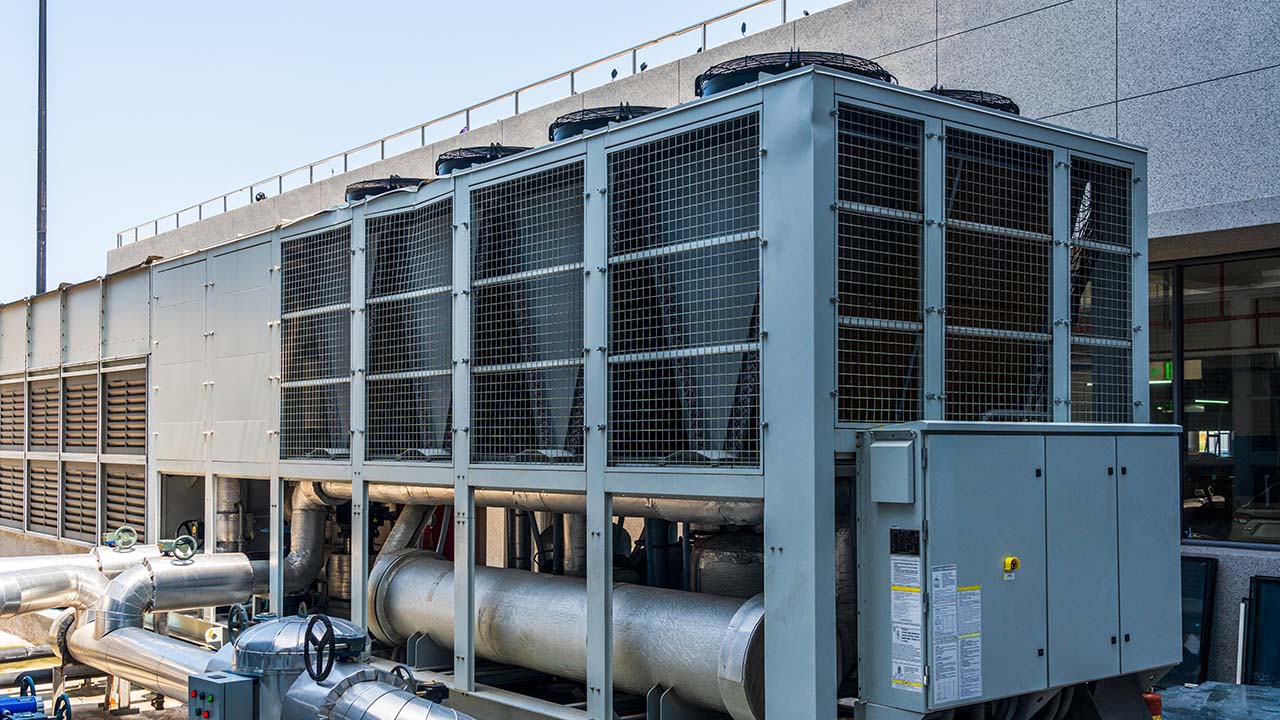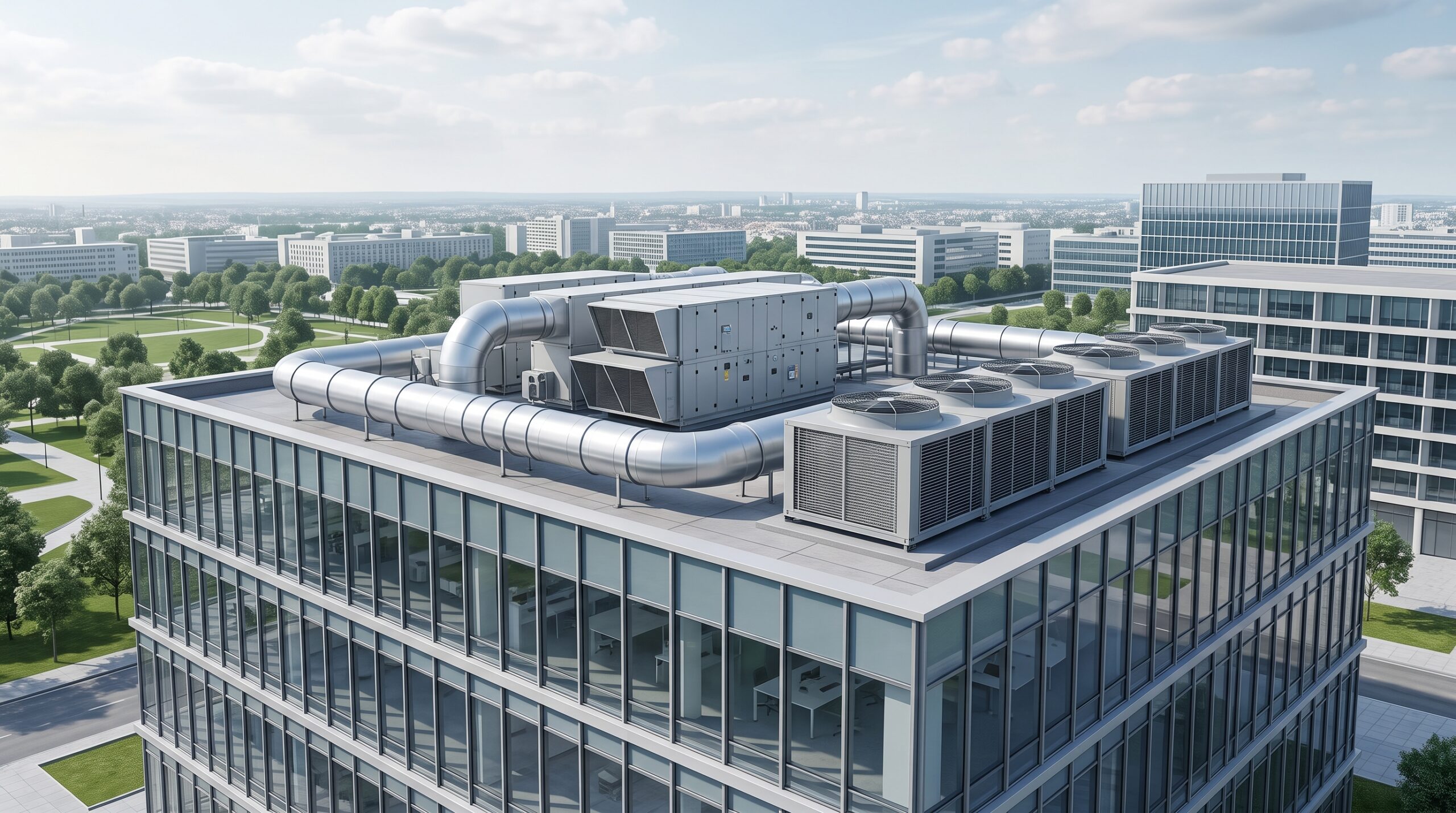
If you have ever wondered “What is HVAC?”, you’re not alone. HVAC is an important part of modern buildings, but the term is often used without explaining what it actually means.
From keeping homes cool to maintaining comfortable conditions in offices, hospitals, shopping malls and factories, HVAC systems play an important role in creating comfortable and healthy indoor environments.
So, what does HVAC stand for, how does an HVAC system work, and why is professional system design important? Here is a simple guide to understanding HVAC.
What Does HVAC Stand For?
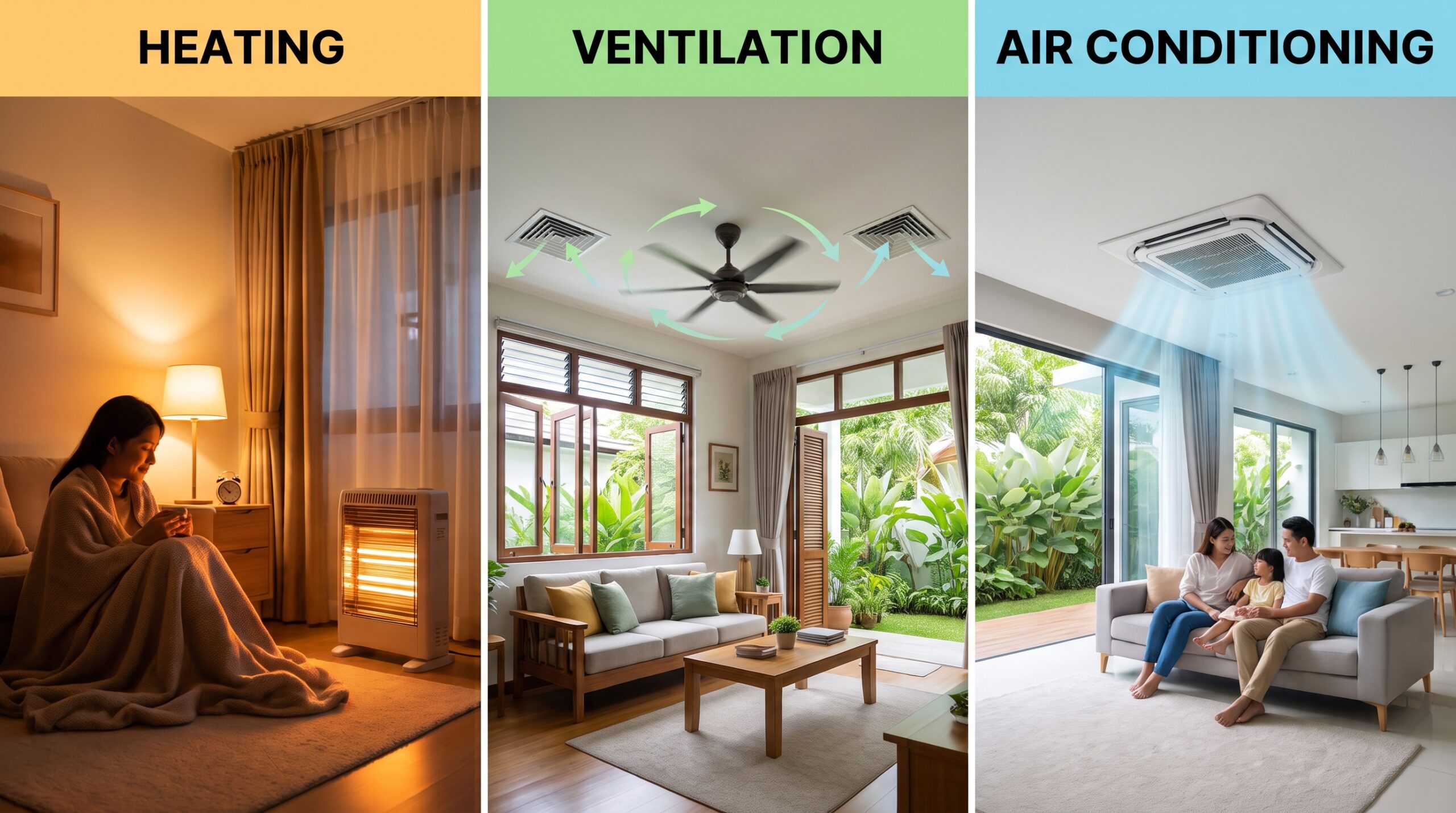
HVAC stands for Heating, Ventilation and Air Conditioning.
The three functions work together to help control your indoor environment:
Heating
Heating raises indoor temperatures when necessary.
Ventilation
Ventilation replaces or circulates indoor air and can help manage pollutants, odours and humidity.
Air Conditioning
Air conditioning cools and dehumidifies indoor spaces.
In Malaysia, where the climate is generally hot and humid, air conditioning and ventilation are particularly important parts of an HVAC system.
Although heating may not exactly be a major requirement for most Malaysian buildings, the term HVAC is still widely used to describe systems responsible for indoor climate control.
What Are the Main Components of an HVAC System?
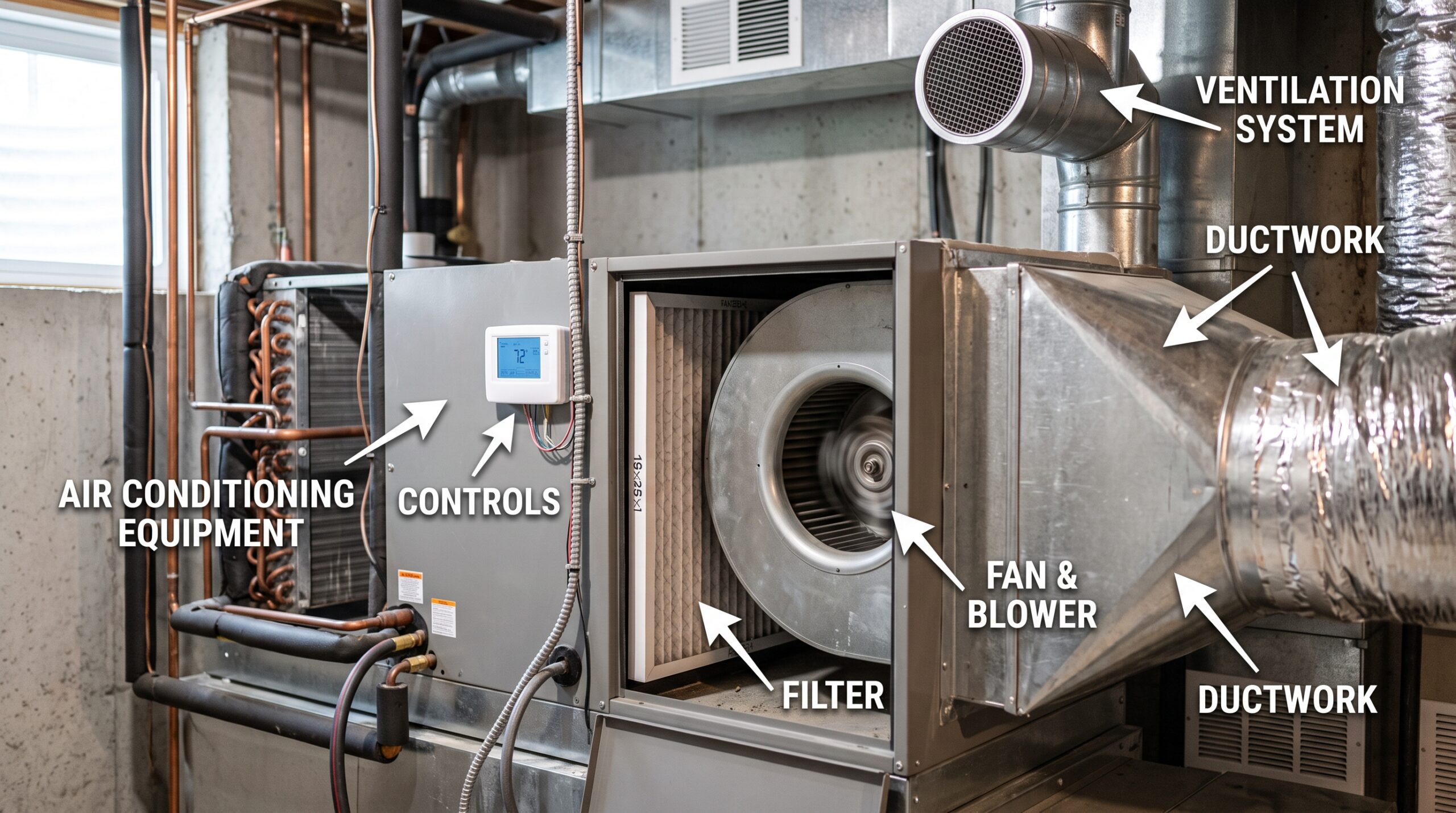
An HVAC system can consist of many different components depending on the building and its requirements. Common components include:
Air Conditioning Equipment
Air conditioning equipment removes heat from indoor spaces and helps control temperature and humidity. Depending on the application, this may include VRF systems, chillers or packaged air conditioning systems.
Fans and Blowers
Fans and blowers move air through the system and distribute conditioned air throughout different areas of a building.
Ductwork
Ducts transport conditioned air between the HVAC equipment and different rooms or zones. Proper duct design is important for maintaining effective airflow.
Filters
Filters capture dust and other airborne particles before air is circulated through the building. Regular cleaning or replacement helps maintain airflow and system performance.
Ventilation Systems
Ventilation introduces fresh outdoor air and removes stale indoor air. This is very important in occupied buildings where air quality and ventilation requirements need to be carefully managed.
Controls
Modern HVAC systems can use thermostats, sensors, centralised controls and building management systems to monitor and adjust temperature, airflow and system operation.
How Is HVAC Different from Air Conditioning?
Air conditioning is one part of HVAC. When people say “air conditioner” or “air conditioning”, they are generally referring specifically to cooling and dehumidifying a space. HVAC is a broader term that includes heating, ventilation and air conditioning.
For example, a complete HVAC system in a commercial building may include air conditioning equipment, ventilation, filtration, ductwork and controls. This broader approach allows building operators to manage more than just temperature.
Residential vs Commercial HVAC
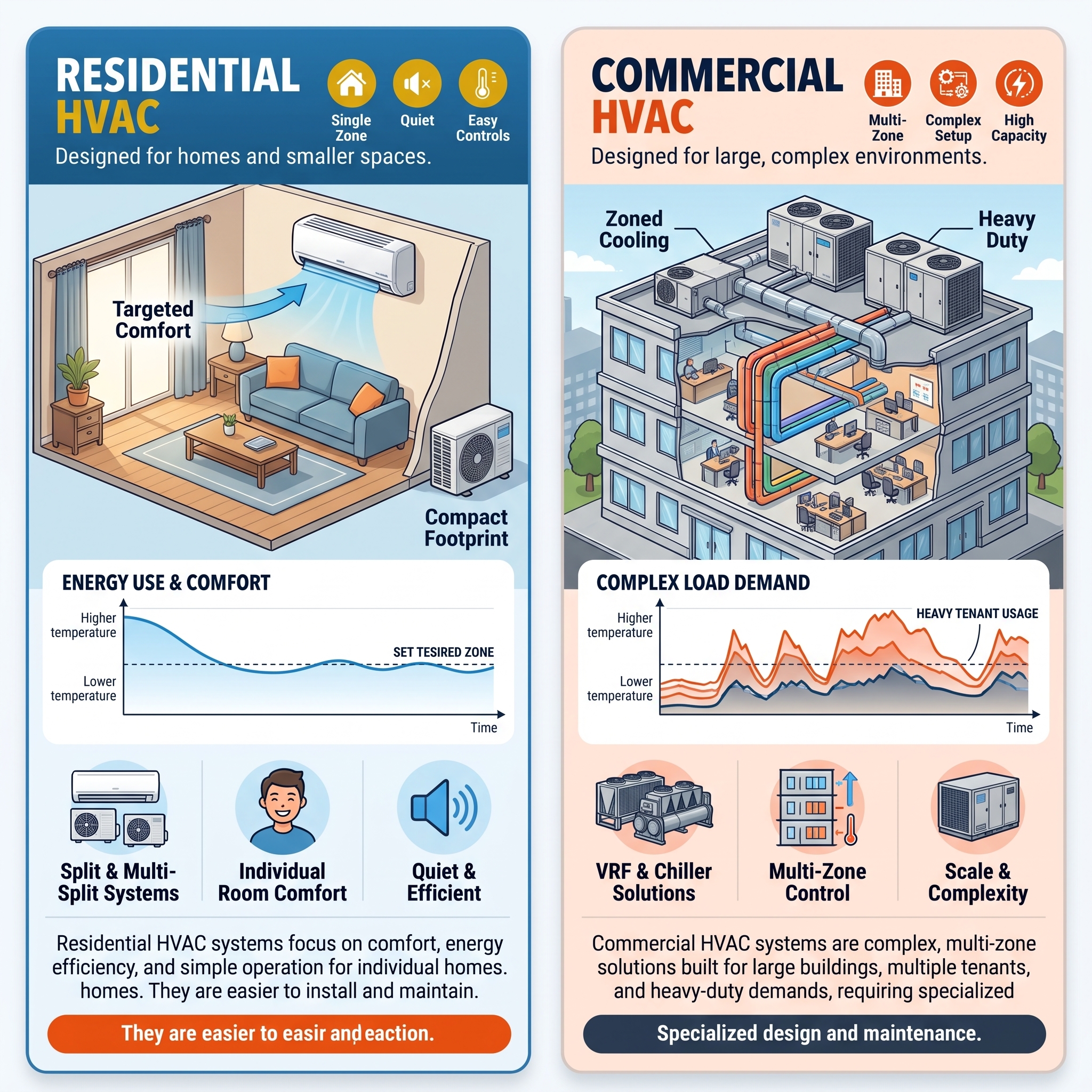
Not all HVAC systems are designed for the same environment.
🏠 Residential HVAC
Residential systems are generally designed to provide cooling and comfort for individual homes or smaller spaces.
Common solutions include split-unit air conditioners, multi-split systems and other smaller-scale cooling systems, with a focus typically on:
🏢 Commercial HVAC
Commercial HVAC systems are designed for larger and more complex environments. A commercial building may have multiple floors, zones, tenants and different occupancy levels, posing more complicated cooling requirements.
These solutions can include:
Why Does Ventilation Matter?

Air conditioning and ventilation serve different but complementary purposes. For reference, an air conditioner can cool and dehumidify indoor air, while a ventilation system can introduce fresh outdoor air and help remove stale air and certain indoor pollutants.
This is particularly important in buildings with high occupancy, such as:
Good ventilation can contribute to better indoor air quality, while appropriate filtration and humidity control can further support a comfortable indoor environment.
The ventilation requirements of a building depend on factors such as occupancy, building use and local requirements.
HVAC and Energy Efficiency
HVAC systems can represent a significant portion of a building’s energy consumption, particularly in warm climates where cooling is required for much of the year. This makes energy efficiency an important consideration when designing an HVAC system.
Modern systems can incorporate technologies like:
💡 For example
For example, an inverter air conditioning system can adjust its output according to cooling demand instead of simply operating at full capacity continuously.
Where Are HVAC Systems Used?
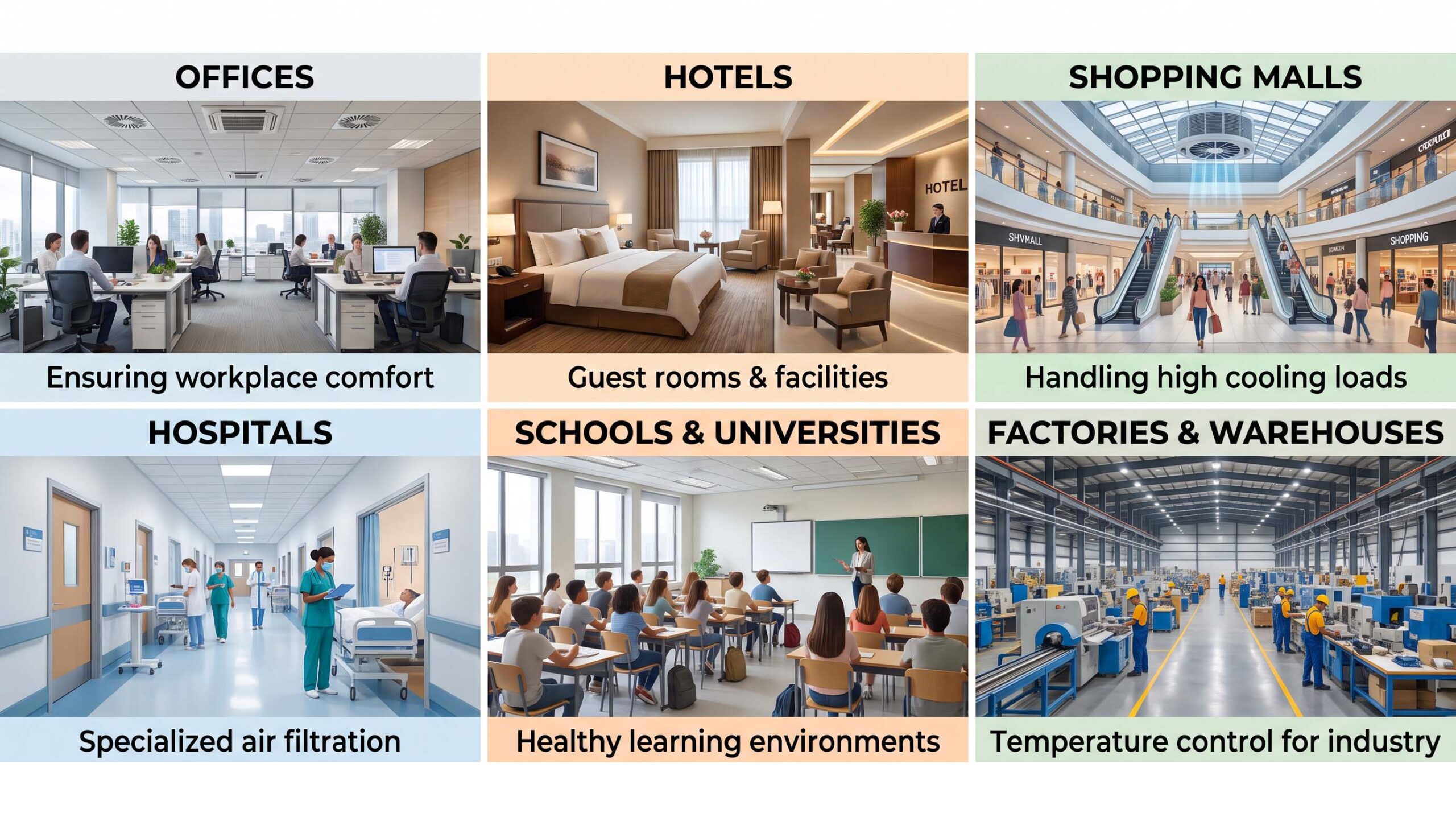
HVAC systems are used across a wide range of buildings and industries. Common examples are:
Offices
HVAC systems help maintain comfortable working conditions for employees.
Hotels
Hotels require reliable temperature control across guest rooms, restaurants, function rooms and other facilities.
Shopping Malls
Large retail developments can require centralised cooling systems capable of handling substantial and constantly changing cooling loads.
Hospitals
Healthcare facilities have specialised requirements for temperature, ventilation, filtration and indoor environmental conditions.
Schools and Universities
Educational facilities need effective cooling and ventilation to maintain comfortable learning environments.
Factories and Warehouses
Industrial HVAC systems can help manage temperature and environmental conditions in large spaces where machinery, equipment and processes may generate significant heat.
Why Does Professional HVAC Design Matter?
Choosing HVAC equipment is not simply about selecting the biggest or most powerful system available. A properly designed HVAC system should consider the building’s cooling load, layout, occupancy, operating hours, ventilation requirements and future needs.
An undersized system may struggle to maintain comfortable temperatures, while an oversized system can result in unnecessary costs and inefficient operation. Professional system design can help determine:
Good design is particularly important for larger commercial and industrial projects, where an HVAC system can be a significant long-term investment. If you’re looking into getting an HVAC system consultation for your building, consider consulting an experienced Topaire air conditioning professional.