


For commercial buildings, air conditioning is about more than keeping people cool. A well-designed commercial air conditioning system needs to provide consistent comfort, manage energy consumption and operate reliably throughout the building’s lifecycle.
From offices and shopping malls to hotels, schools, hospitals and industrial facilities, every building has different cooling requirements. Understanding the range of available commercial HVAC systems can help building owners, developers and facility managers choose a solution that best fits their needs.
What Is Commercial Air Conditioning?
Commercial HVAC systems are designed to provide cooling and air distribution across larger buildings and commercial environments. Unlike a residential air conditioner designed to cool a single room, commercial systems may need to manage multiple zones, large open spaces and varying cooling loads throughout the day. Common commercial air conditioning solutions include:
The right system depends on several factors such as building size, cooling requirements, number of occupants, operating hours, zoning requirements and energy-efficiency targets.
VRF Systems
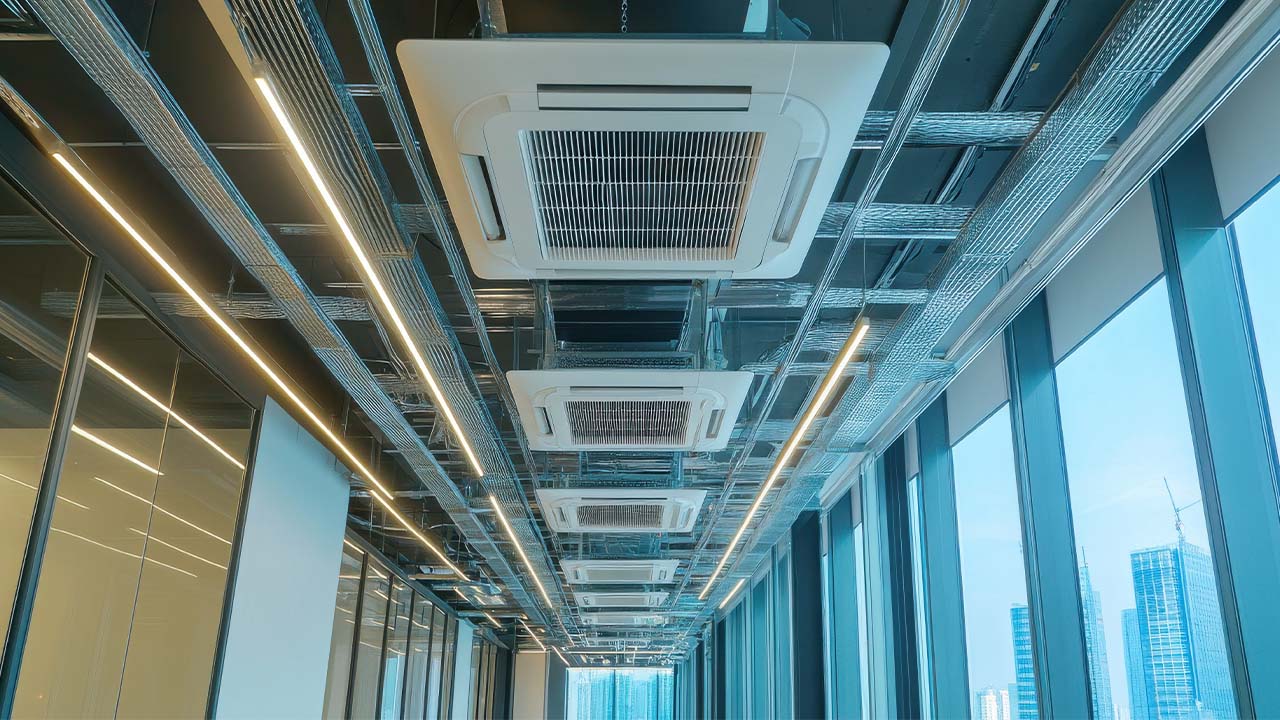
Variable Refrigerant Flow (VRF) systems are designed for commercial buildings where different areas require individual temperature control. A VRF system connects multiple indoor units to one or more outdoor units, allowing refrigerant flow to adjust to the cooling demand of different zones.
VRF systems can be suitable for:
A key benefit of this type of system is its flexibility. Specific areas can be cooled according to their specific needs instead of operating the entire building uniformly. Inverter-driven VRF systems can also adjust their output according to demand, helping improve energy efficiency as cooling requirements change throughout the day.
Chiller Systems
For larger buildings with higher cooling requirements, commercial chiller systems provide centralised cooling by producing chilled water that can be distributed throughout the building. Chillers can be broadly categorised into air-cooled and water-cooled systems, with different setups available depending on the building’s size and requirements. Chiller systems are commonly used in:
For large-scale applications, choosing the appropriate chiller configuration can have a significant impact on the building’s energy consumption, reliability and lifecycle costs.
Fan Coil Units (FCUs)
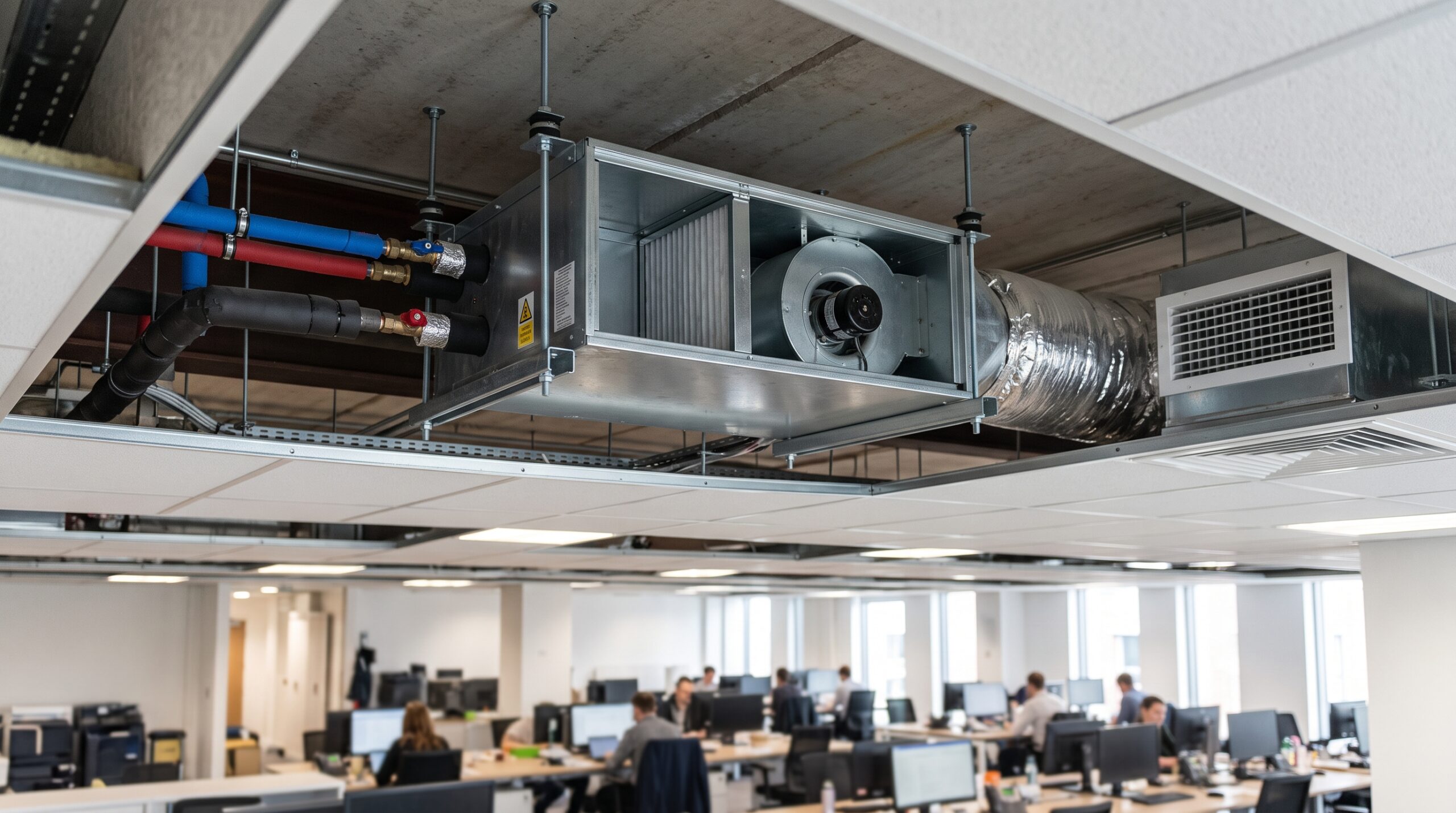
Fan Coil Units (FCUs) are indoor units that circulate air across a cooling coil to provide conditioned air to individual rooms or zones. FCUs are often used as part of chilled-water air conditioning systems. Different types of FCUs, including ceiling-concealed, ducted, cassette and wall-mounted configurations, can be chosen based on the needs of the space.
FCUs can be suitable for:
Because individual FCUs can serve different zones, they are able to provide flexibility in managing cooling requirements throughout a building.
Packaged Air Conditioning Systems
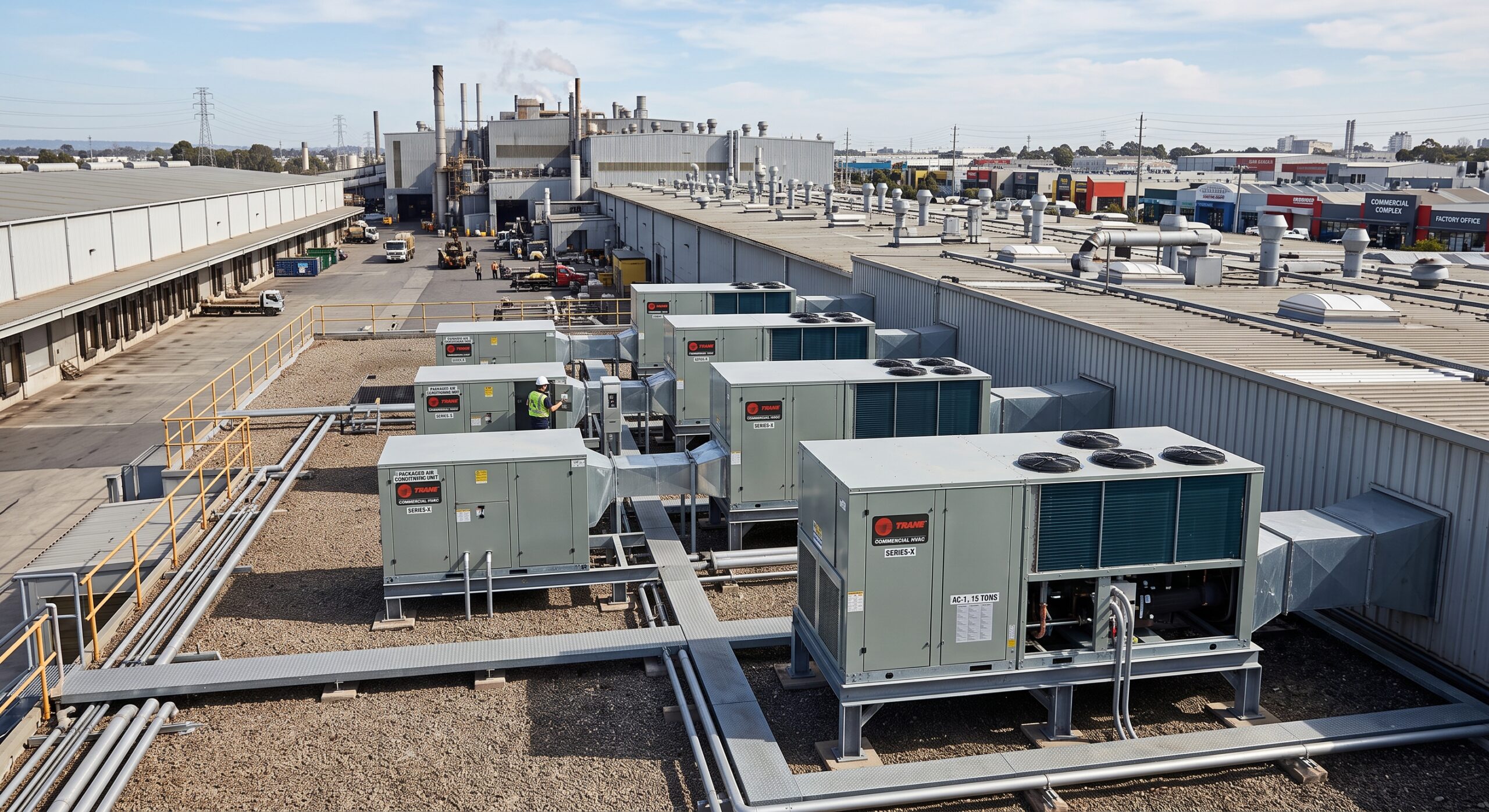
Packaged air conditioning systems combine key cooling components into a single system and can provide a practical solution for commercial and industrial spaces. Different setups are available, including air-cooled, water-cooled, high-static ducted and rooftop packaged systems.
Packaged systems can be suitable for applications where reliable cooling and effective air distribution are required, including:
High-static ducted systems can also support longer duct runs, making them suitable for larger or more complex building layouts.

Air-Side and DX Systems
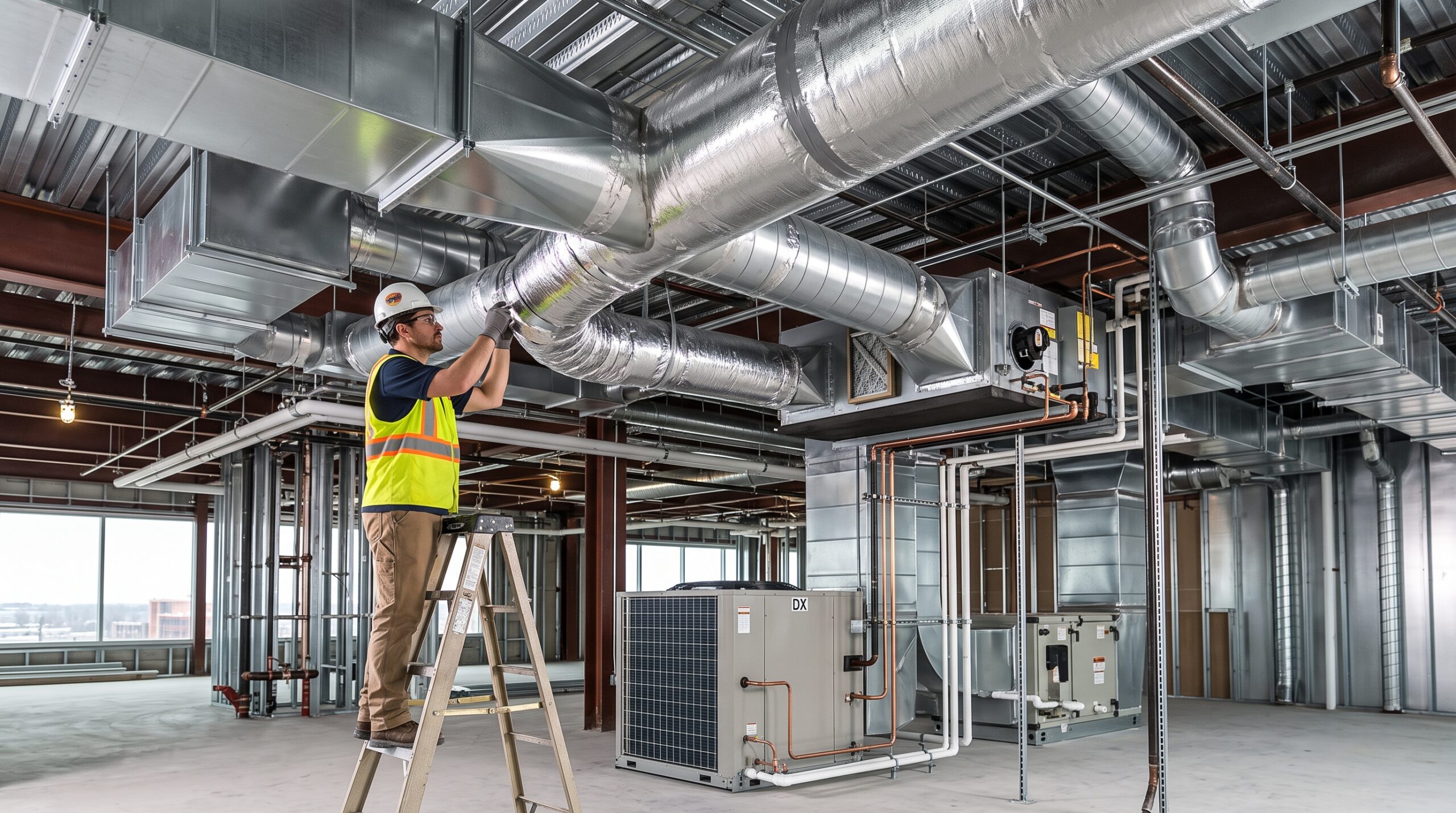
Air-side systems are responsible for conditioning and distributing air throughout a building, while Direct Expansion (DX) systems use refrigerant directly to provide cooling.
Depending on the building design, DX and chilled-water solutions can be combined with different air distribution systems to provide conditioned air across multiple spaces.
💡 Worth knowing
The design of the air distribution system is especially important. Poorly designed ductwork or restricted airflow can result in uneven temperatures and cause the system to work harder than necessary.
How Do You Choose the Right Commercial HVAC System?
There is no single commercial air conditioning system that is suitable for every building.
Consider the Building Size
A small commercial building will have very different requirements from a shopping mall, hospital or multi-storey office tower. VRF and packaged systems may be suitable for small- to medium-sized applications, while larger developments may require centralised chiller systems supported by FCUs.
Understand the Cooling Load
The system needs to provide sufficient cooling for the building’s actual requirements. Factors such as building orientation, window area, number of occupants, lighting, equipment, operating hours and heat-producing machinery can all affect the building’s cooling load.
A professional HVAC assessment can help determine the appropriate capacity and configuration.
Consider Zoning Requirements
Different areas may have different cooling requirements. An office meeting room, hotel bedroom and retail space, for example, may not need the same cooling at the same time. Systems like VRF provide individual zone control, while chilled-water systems with FCUs can also provide zoned cooling across larger buildings.
Look Beyond the Initial Cost
The cheapest commercial HVAC system isn’t necessarily the most cost-effective over its lifetime. Building owners should consider the total lifecycle cost, including equipment and installation, electricity consumption, preventive maintenance, repairs and replacement parts, equipment lifespan and future upgrades.
💡 Remember
An energy-efficient system may require a higher initial investment but can result in lower operating costs over many years. For buildings that operate air conditioning for long hours every day, even small improvements in energy efficiency can have a significant impact on long-term operating expenses.
Why Maintenance Planning Matters
Commercial air conditioning systems can operate for long hours and under significant loads. Preventive maintenance should therefore form part of the building’s facilities management plan.
Maintenance may include:
Regular maintenance can help identify potential problems before they result in costly breakdowns or disruption to business operations.
Future-Proofing Your Commercial HVAC System
A commercial HVAC system should not only meet today’s requirements. It should also be able to adapt as the building changes.
When choosing a system, consider whether it can accommodate:
Commercial HVAC: Key Considerations
| Consideration | Why It Matters |
|---|---|
| 📏 Building size | Determines the appropriate system |
| 🌡️ Cooling load | Ensures sufficient cooling capacity |
| 🗺️ Zoning | Allows different areas to be controlled appropriately |
| ⚡ Energy efficiency | Helps manage long-term operating costs |
| 💰 Lifecycle cost | Provides a broader view of the investment |
| 🔧 Maintenance | Supports reliability and equipment lifespan |
| 📈 Scalability | Allows the system to adapt to future needs |
| 🎛️ Controls | Helps optimise system operation |
On mobile, swipe left or right within the table to view all columns.