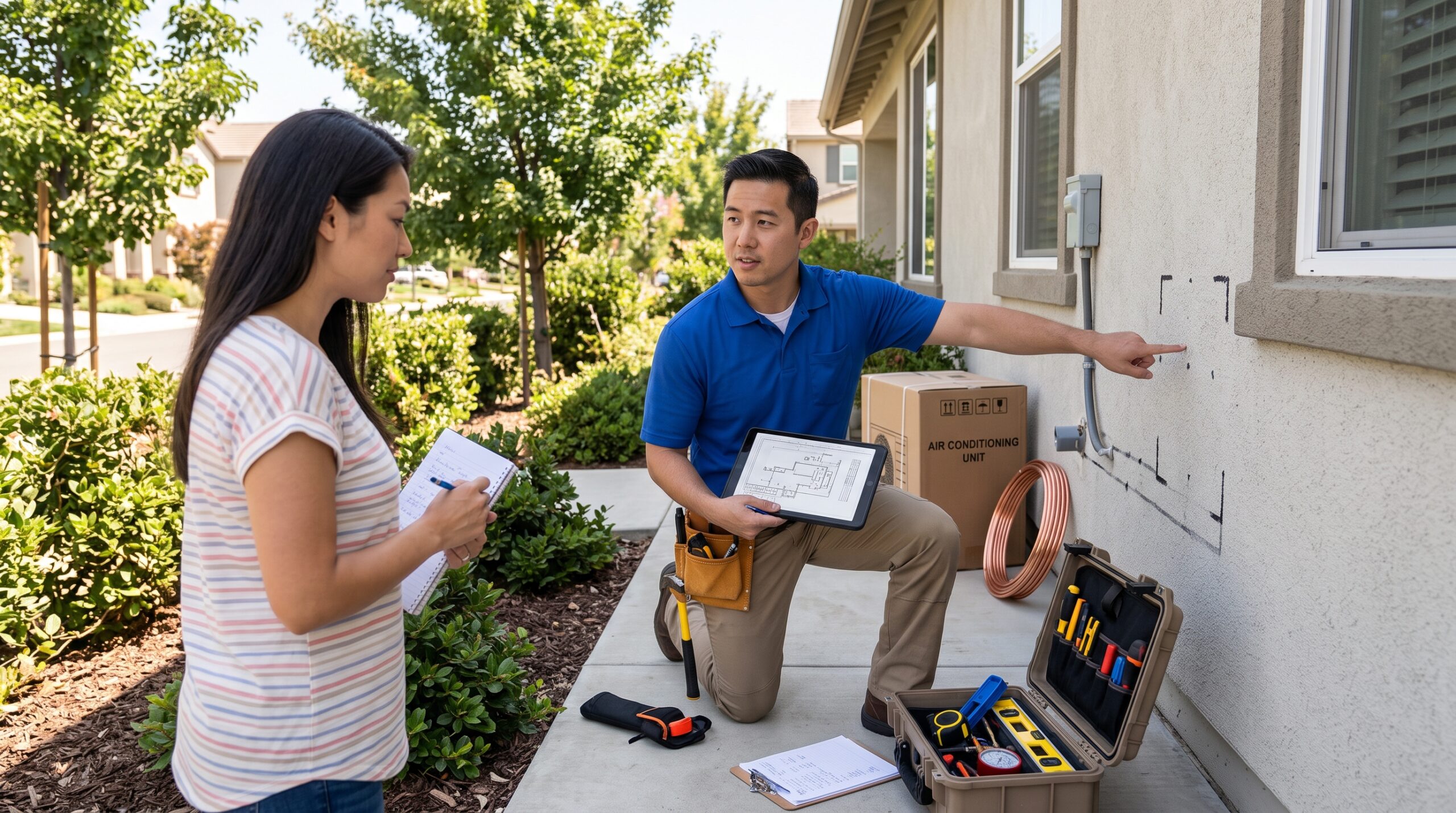
Installing a new air conditioner involves more than just mounting a unit on the wall and switching it on. Factors such as location, electrical supply, drainage, refrigerant piping and outdoor condenser placement can all affect how well your system performs.
Before air conditioner installation begins, homeowners should understand what needs to be checked and prepared. Use this air conditioner installation checklist to prepare for installation day.
Choose the Right Indoor Unit Location
First, the location of your indoor unit can affect airflow and cooling performance. Ideally, your unit should be positioned where cool air can circulate throughout the room without being blocked by furniture, walls or other obstacles.
Before installing an air conditioner, consider:
Avoid placing an indoor unit directly above heat-producing appliances or where airflow is obstructed.
Check Your Electrical Requirements
Air conditioners are powerful electrical appliances, so the electrical supply should be suitable for your specific unit.
Before installation, your installer should assess the electrical requirements, including the unit’s power requirements, wiring and circuit protection. An installation may require dedicated electrical connections depending on the air conditioner and property.
Never assume that an existing electrical connection in your home is automatically suitable for a new air conditioner. Using an inappropriate electrical supply can affect system reliability and create unnecessary safety risks.
⚡ Safety first
Remember, electrical work should always be carried out by a qualified professional.
Plan the Drainage Before Installation
Air conditioners naturally produce condensation as they remove moisture from indoor air. This water needs to be directed away through a drainage pipe.
Poor drainage planning is one of the issues that can result in water leakage from an indoor unit. Before installation, consider where the drainage pipe will run and whether it has a suitable route and slope to allow water to flow away. It should also be accessible enough for future maintenance and cleaning.
Find the Right Location for the Outdoor Condenser
The outdoor unit of your system releases heat removed from your home, so it needs good airflow around it.
When planning your air conditioner installation, the outdoor condenser should be positioned where it:
Avoid enclosing the outdoor unit in a confined space where hot air can become trapped. Poor ventilation can make it harder for the system to release heat and may affect your air conditioner’s cooling efficiency.
Check the Refrigerant Piping
The refrigerant pipes connect the indoor and outdoor units and are an important part of the air conditioning system.
During installation, the installer should consider the appropriate pipe size, length and routing based on the manufacturer’s specifications and the layout of the property. Poorly installed or incorrectly sized piping can affect system performance and could contribute to refrigerant leaks or reduced efficiency.
Make Sure the Wall Can Support the Indoor Unit
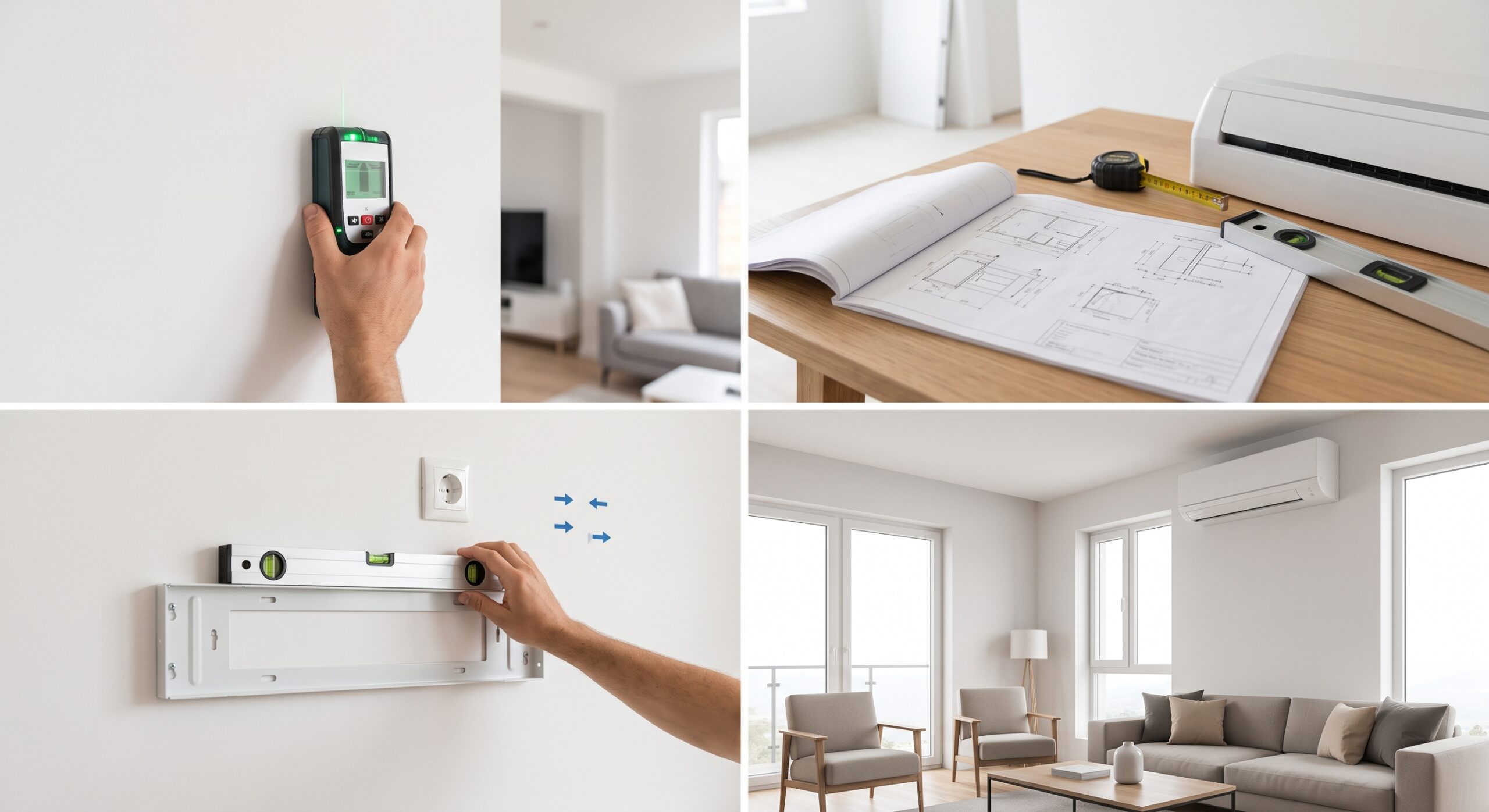
Before mounting an indoor unit, check the wall you intend to use to ensure it can safely support the equipment. This is especially important for heavier units or installations involving certain wall types.
The installer should also consider the position of electrical connections, drainage and refrigerant piping before drilling or mounting the unit.
Good planning can prevent unnecessary drilling, exposed piping and difficult servicing later.
Consider Appearance and Accessibility
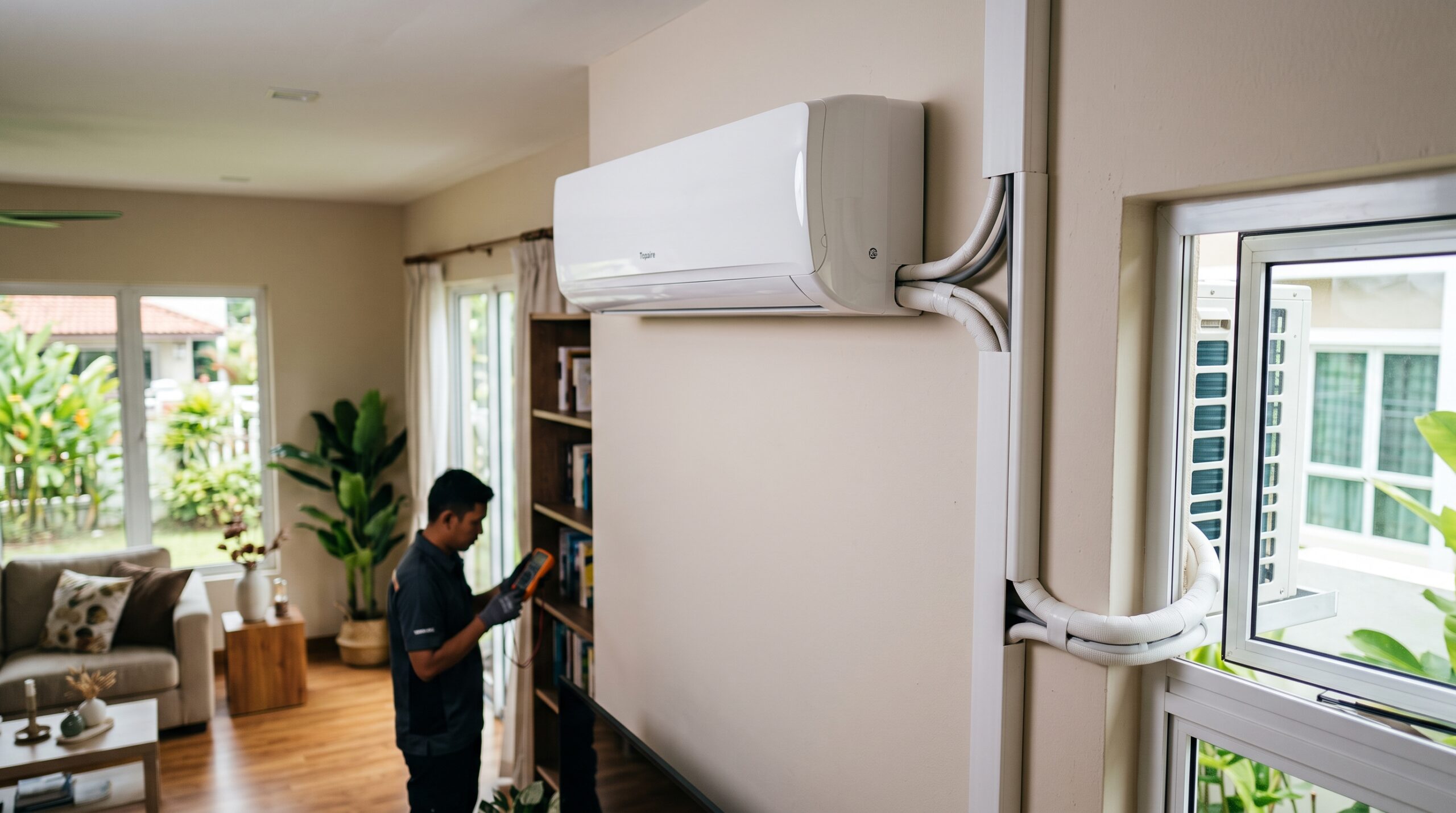
An air conditioner is a long-term fixture in your home, so installation should consider both appearance and practicality.
Refrigerant pipes, cables and drainage lines should be routed neatly where possible without compromising functionality. At the same time, avoid concealing everything in a way that makes future servicing difficult.
A neat installation is not necessarily a good installation if it makes future repairs or servicing unnecessarily difficult.
Test the System After Installation
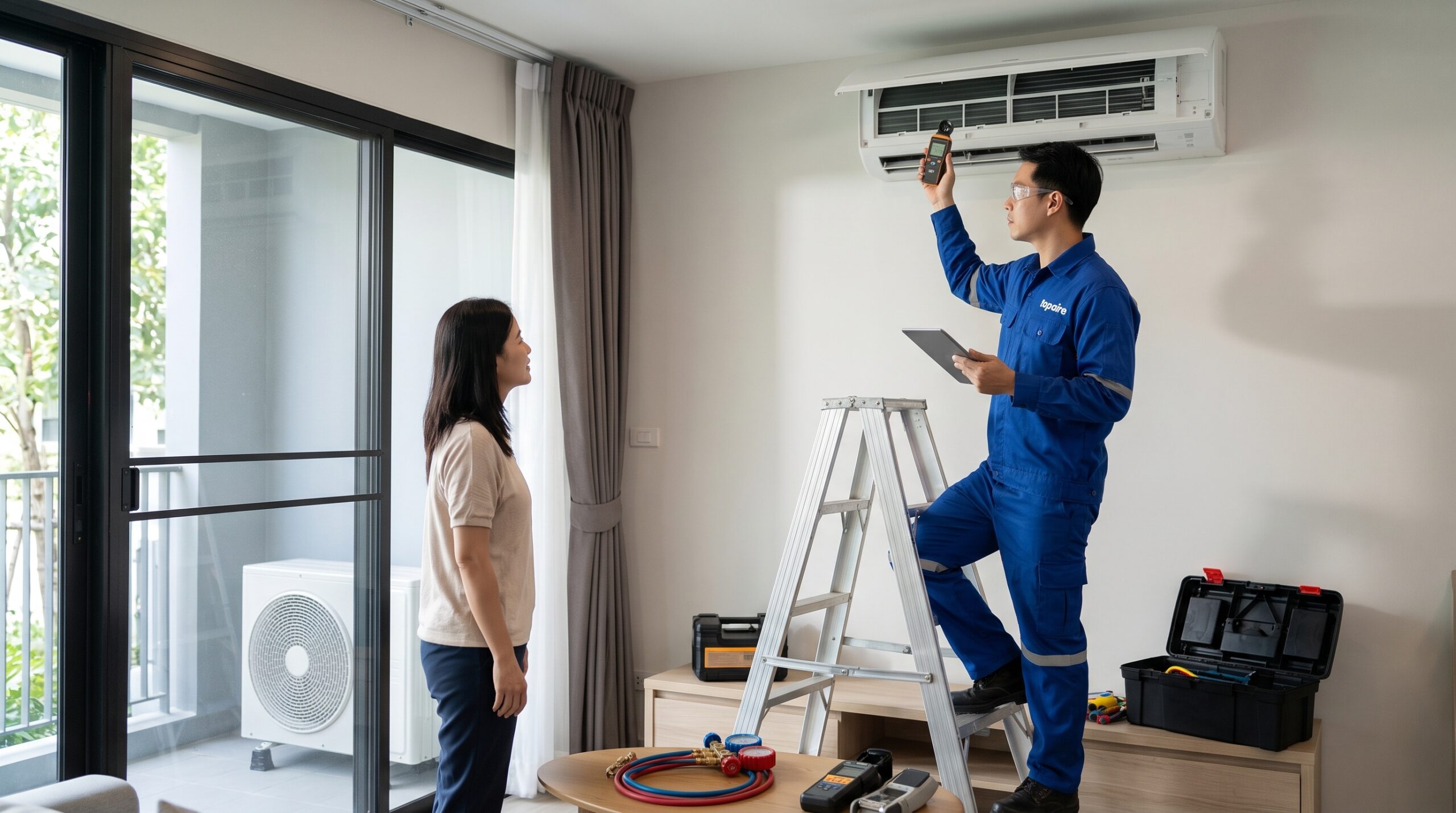
Finally, one of the most important parts of installing an air conditioner is testing it after everything has been connected. Before the installer leaves, the system should be operated and checked for proper performance.
The installer should verify:
Check that the indoor unit is cooling properly and that condensation is draining correctly rather than leaking back into the room.
If something doesn’t seem right, raise the issue with the installer before the installation is considered complete.
Common Air Conditioner Installation Mistakes
Poor installation can cause problems even when you have purchased a high-quality air conditioner. Some common mistakes include:
Installing the Indoor Unit in the Wrong Location
A blocked or poorly positioned indoor unit can cause uneven cooling and inefficient airflow.
Blocking the Outdoor Unit
Insufficient ventilation around the condenser can make it harder for the system to release heat.
Incorrect Drainage
Poorly positioned or sloped drainage pipes can contribute to water leakage.
Incorrect Refrigerant Piping
Incorrect pipe sizing, excessive bends or poorly sealed connections can affect system performance.
Incorrect Electrical Connections
Incorrect wiring or unsuitable electrical connections can create safety and reliability concerns.
Ignoring Future Maintenance
Installing the unit in a hard-to-access location can make routine air conditioner maintenance more complicated and potentially more expensive.
Your Air Conditioner Installation Checklist
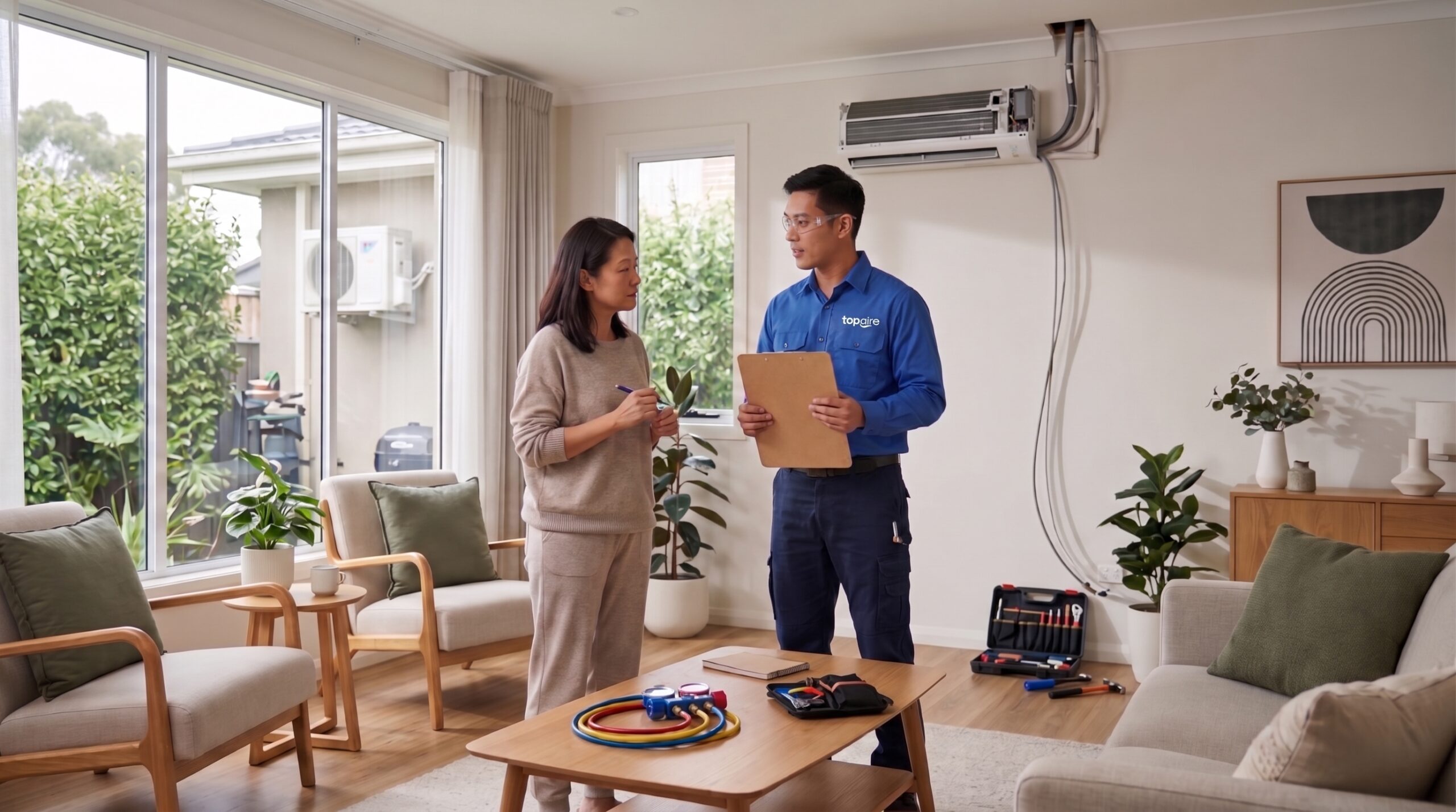
| Before Installation | What to Check |
|---|---|
| 🏠 Indoor unit location | Good airflow and easy maintenance access |
| 🔌 Electrical supply | Suitable for the air conditioner |
| 💧 Drainage | Proper route and slope |
| 🌬️ Outdoor unit | Adequate ventilation and secure mounting |
| 🧊 Refrigerant piping | Correct size, length and insulation |
| 🧱 Wall strength | Suitable for secure mounting |
| 🧵 Pipe and cable routing | Safe, practical and neat |
| ✅ Final testing | Cooling, drainage and system operation |
On mobile, swipe left or right within the table to view all columns.
What Should You Ask Your Installer?
Before installation day, don’t be afraid to ask your installer a few practical questions:
Getting these details ironed out beforehand can help avoid unexpected issues or extra work later.